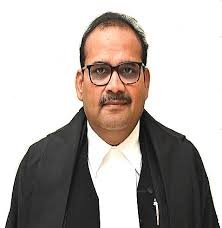

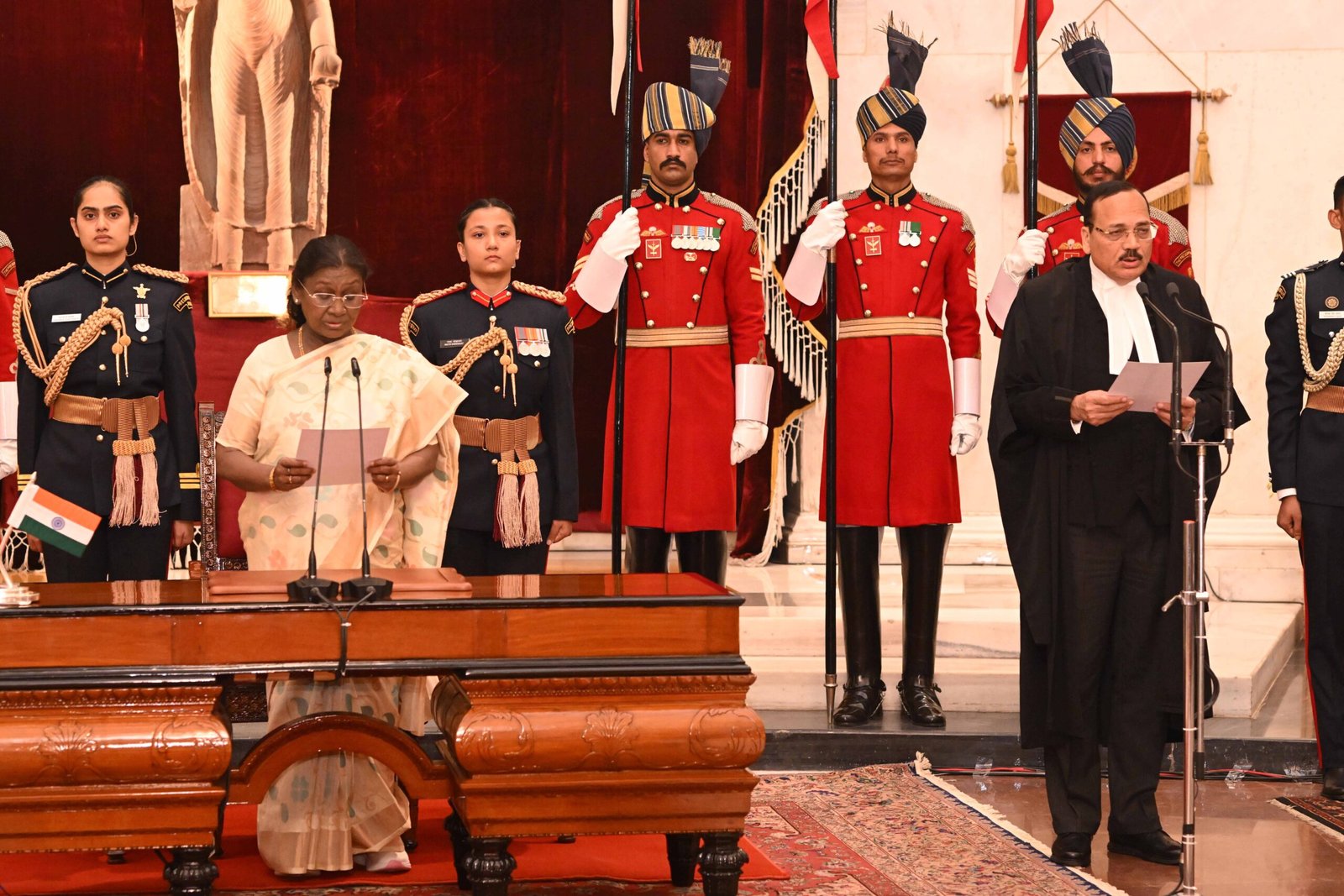
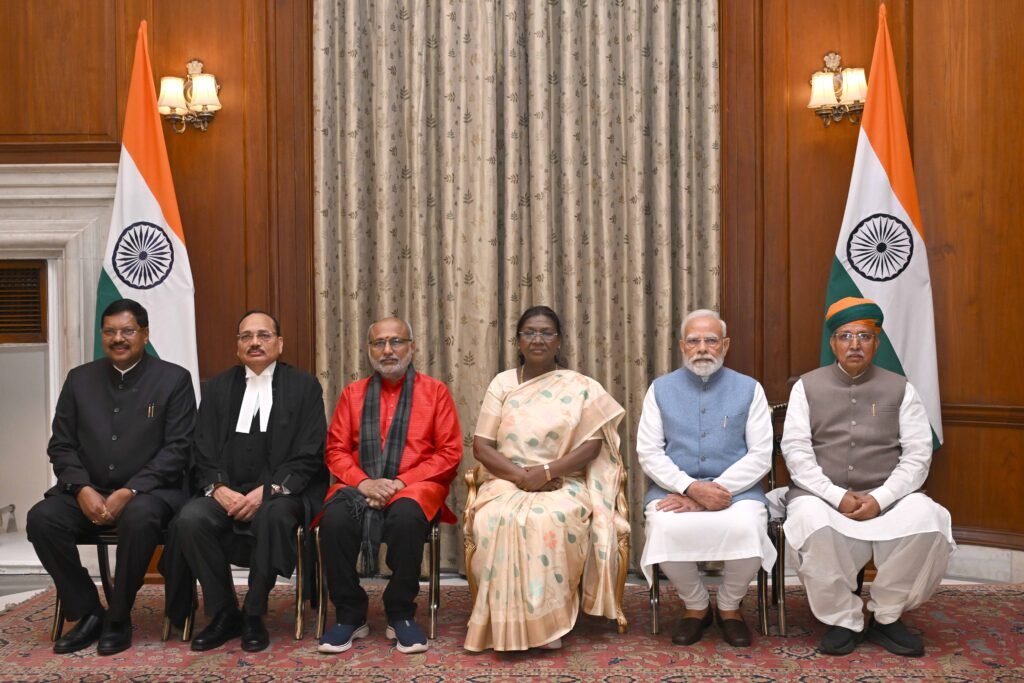
In a ceremonial event at Rashtrapati Bhavan, Justice Surya Kant was sworn in as the 53rd Chief Justice of India (CJI) on November 24, 2025. President Droupadi Murmu administered the oath, marking the commencement of his nearly 15-month tenure until February 9, 2027, when he turns 65. This transition follows the retirement of Justice Bhushan Ramkrishna Gavai, ushering in a period expected to focus on judicial reforms, efficiency, and upholding constitutional values amid evolving societal challenges.
Born on February 10, 1962, in Hisar, Haryana, Justice Kant’s journey to the apex court is rooted in a distinguished legal career. He graduated with a law degree from Maharshi Dayanand University, Rohtak, in 1984 and began practicing at the Punjab and Haryana High Court. Designated as a senior advocate in 2001, he was elevated as a judge there in 2004. His administrative acumen shone during his tenure as Chief Justice of the Himachal Pradesh High Court from 2018 to 2019, where he implemented key reforms in case management and digitalization. Appointed to the Supreme Court in May 2019, he has since been part of benches delivering over 500 judgments, establishing himself as a progressive jurist.
Justice Kant’s judicial philosophy emphasizes transparency, accountability, and the judiciary’s role as a guardian of democracy. He played a pivotal role in landmark cases, including upholding the abrogation of Article 370 in Jammu and Kashmir, where he concurred on the temporary nature of the provision and the need for statehood restoration. In the Pegasus spyware controversy, his bench directed a probe into alleged surveillance, reinforcing privacy rights under Article 21. He also contributed to electoral reforms, advocating for stricter disclosure norms for candidates with criminal backgrounds. Notably, in the same-sex marriage petitions, Justice Kant dissented, arguing for legal recognition of queer unions to ensure equality, though the majority deferred it to Parliament. His rulings often balance national security with individual liberties, as seen in cases involving sedition laws and bail under UAPA.
The swearing-in ceremony, attended by dignitaries including Prime Minister Narendra Modi, Union Law Minister Arjun Ram Meghwal, and outgoing CJI Gavai, highlighted the seamless continuity in India’s judicial leadership. Justice Kant’s address post-oath underscored the need for expeditious justice delivery, leveraging technology to reduce pendency, and fostering public trust in the judiciary. Legal experts anticipate his term will prioritize backlog reduction—currently over 80,000 cases in the Supreme Court—through alternative dispute resolution and virtual hearings.
As CJI, Justice Kant faces pressing issues like judicial vacancies, with over 30% posts unfilled in high courts, and debates on collegium reforms. His Haryana roots and experience in diverse benches position him to address regional disparities in justice access. Tributes poured in from bar associations and political leaders, with Goa CM Pramod Sawant congratulating him on social media.
This appointment reaffirms India’s commitment to an independent judiciary. Justice Kant’s tenure promises to blend tradition with innovation, ensuring the Supreme Court remains a beacon of justice in a dynamic democracy.