
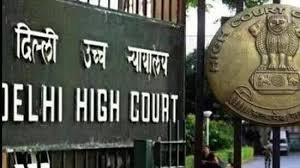
New Delhi, October 29, 2025 – In a significant push for gender equality in the armed forces, a Division Bench of the Delhi High Court, comprising Justices C. Hari Shankar and Om Prakash Shukla, has ordered the Indian Army to issue appointment letters to four women aspirants for Short Service Commission (SSC) posts against unfilled vacancies reserved for male candidates. The ruling, delivered in a batch of writ petitions (Deep Shikha v. Union of India & Ors. and connected matters, W.P.(C) 15372/2025 et al.), underscores the judiciary’s commitment to bridging gender gaps in military recruitment, drawing directly from Supreme Court precedents.
The petitioners—Deep Shikha, Kanishka Shekhawat, Akshita Bhardwaj, and Soha Kaustubh Samak—had successfully cleared all selection stages, including the Services Selection Board (SSB) interviews and medical examinations, for SSC positions in various streams. However, they were denied appointments due to limited vacancies earmarked for women. Despite their merit, the Army maintained that these slots could not be filled from the women’s merit list, even as numerous male-reserved vacancies remained vacant. The petitioners argued this violated Articles 14 (equality) and 16 (equal opportunity in employment) of the Constitution, seeking absorption against the unfilled male posts.
Represented by advocate Meenakshi Joshi, the women contended that rigid gender-based quotas perpetuated discrimination, especially when qualified female candidates were available. The Union of India, through counsels including Syed Abdul Haseeb, Iram Majid, and Sandeep Kumar Mahapatra (assisted by Major Anish Muralidhar from the Army), defended the policy, asserting that vacancies are stream-specific and gender-segregated to maintain operational balance.
The High Court, in its concise oral judgment, squarely relied on the Supreme Court’s recent ruling in Arshnoor Kaur v. Union of India (2025 SCC OnLine SC 1668), which mandated accommodating meritorious women against unfilled male SSC vacancies in the Army. It also invoked its own precedent in Shruti Vyas v. Union of India (2025 SCC OnLine Del 6045), emphasizing that unfilled vacancies should not go waste when eligible candidates exist. “The issue in controversy is squarely covered,” Justice Hari Shankar observed, noting that the Army’s recruitment notification itself allowed for such adjustments in exigencies.
The bench highlighted the broader context of women’s induction into the Army, post the landmark Ministry of Defence v. Babita Puniya (2020) 3 SCC 589, which opened permanent commissions. While acknowledging the Army’s progress—over 1,000 women officers now serve in SSC roles—the court stressed that merit must prevail over artificial barriers. It directed the respondents to issue joining letters within two weeks, without prejudice to ongoing recruitment cycles.
This verdict has far-reaching implications for gender integration in defense services. With only 3-4% women in the Army (per 2024 data), it could accelerate inclusivity, especially amid shortages in technical streams. Legal experts praise it as a “meritocratic corrective,” aligning with the Atmanirbhar Bharat ethos. However, critics within the forces worry about potential disruptions to unit cohesion.
Petitioners expressed relief, with Deep Shikha stating, “This restores faith in justice.” The Army has not indicated an appeal, but similar petitions may surge. As India marks 75 years of the Constitution, this ruling reaffirms equality’s primacy, urging systemic reforms for a more equitable military.
(Word count: 498)