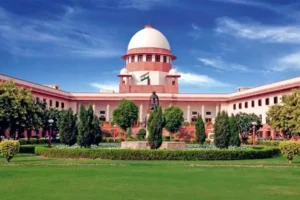

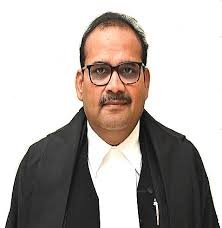
In a significant move to bolster access to justice for the underprivileged, Chief Justice of India (CJI) Surya Kant has nominated Justice Jitendra Kumar Maheshwari as the new Chairman of the Supreme Court Legal Services Committee (SCLSC). The appointment, effective from November 24, 2025, follows an official notification issued under Section 3A of the Legal Services Authorities Act, 1987. This development underscores the judiciary’s ongoing commitment to free legal aid and equitable dispute resolution.
Justice Maheshwari, born on June 29, 1961, brings a wealth of experience to the role. Enrolled as an advocate in 1985, he practiced extensively in civil, criminal, constitutional, and service matters at the Madhya Pradesh High Court. Elevated as a judge of the MP High Court in 2005, he served as Chief Justice of the Andhra Pradesh High Court in 2019 and later as Chief Justice of the Sikkim High Court in 2020. Appointed to the Supreme Court on August 31, 2021, alongside eight others, he has authored key judgments on issues like environmental protection, labor rights, and constitutional interpretations. Notably, since February 2024, Justice Maheshwari has handled rosters involving labor, service, and indirect tax matters, demonstrating his expertise in areas directly relevant to legal aid. His tenure at the apex court, set to end on June 28, 2026, has been marked by a progressive approach to social justice.
The SCLSC, established under the Legal Services Authorities Act, plays a pivotal role in providing free legal services to marginalized sections, including women, children, SC/ST communities, and economically weaker litigants. As Chairman, Justice Maheshwari will oversee the processing of legal aid applications, monitor representation in Supreme Court cases, and coordinate with National and State Legal Services Authorities. The committee ensures that financial constraints do not bar access to the highest court, facilitating everything from filing petitions to engaging empanelled advocates. In recent years, the SCLSC has expanded its outreach through awareness camps, lok adalats, and digital platforms, especially post-COVID.
This nomination comes at a crucial juncture when pendency in courts remains a challenge, with over 80,000 cases in the Supreme Court alone. Justice Maheshwari’s leadership is expected to streamline aid delivery, potentially integrating technology for faster application processing and virtual consultations. Legal experts hail the move, noting his track record in high courts where he emphasized pro bono services and judicial efficiency. It aligns with CJI Surya Kant’s vision for an inclusive judiciary, as seen in recent reforms like live-streaming and e-filing.
The appointment also coincides with Constitution Day celebrations, reinforcing Article 39A’s directive for equal justice and free legal aid. As India grapples with rising litigation from underserved populations, Justice Maheshwari’s role could bridge gaps in legal access, ensuring the Supreme Court remains a true temple of justice for all.
This transition promises enhanced focus on vulnerable litigants, potentially setting precedents for state-level committees. Stakeholders anticipate proactive measures to reduce barriers, making legal recourse more democratic.
(Word count: 508)