
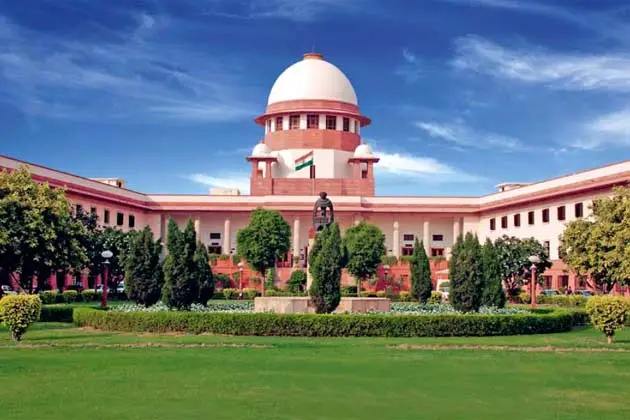
In a significant development that underscores the ongoing tussle between political discourse and legal accountability, the Supreme Court of India on December 4, 2025, admitted Congress leader and Leader of Opposition in the Lok Sabha, Rahul Gandhi’s appeal and extended the interim stay on trial court proceedings in a high-profile defamation case until April 22, 2026. This decision, delivered by a bench comprising Justices M.M. Sundresh and Satish Chandra Sharma, provides Gandhi temporary reprieve. The case stems from Gandhi’s alleged derogatory remarks against the Indian Army during his Bharat Jodo Yatra in 2022, igniting a fierce debate on freedom of speech versus national security sensitivities.
The controversy traces its roots to December 16, 2022, in Amroha, Uttar Pradesh, amid the high-decibel Bharat Jodo Yatra—a 4,000-kilometer foot march aimed at revitalizing the Congress party’s connect with the masses. Responding to a media query on the India-China border tensions, particularly the 2020 Galwan Valley clashes that claimed the lives of 20 Indian soldiers, Gandhi reportedly stated: “The top 10% of people control the government and the Army. They don’t allow the Army to function properly.” He further alleged that China had occupied approximately 2,000 Sq KM of Indian territory without any robust governmental response, questioning the Modi administration’s handling of national security. These comments, framed as a critique of policy lapses, were interpreted by critics as a direct slur on the armed forces’ integrity and morale.
The remarks quickly snowballed into a political firestorm. The Bharatiya Janata Party (BJP), the ruling party at the Centre, accused Gandhi of “immature” and “irresponsible” conduct that undermined troop morale and emboldened adversaries like China. BJP leaders, including Union Ministers, demanded an apology, labeling the statements as “anti-national.” On the other hand, Congress defended them as legitimate opposition scrutiny of executive failures, emphasizing that Gandhi’s words targeted systemic issues, not the soldiers on the ground. The Yatra, already a platform for Gandhi to reclaim narrative space post his 2019 electoral setback, became a flashpoint for this polarized exchange.
Legal action ensued swiftly. In August 2023, Uday Shankar Srivastava, a retired officer of the Border Roads Organisation (BRO)—an entity under the Ministry of Defence instrumental in border infrastructure—filed a private criminal complaint in a Magistrate’s court in Lucknow. Srivastava, invoking Sections 499 and 500 of the Indian Penal Code (IPC)—now transposed to Sections 356 and 357 of the Bharatiya Nyaya Sanhita (BNS), 2023—alleged that Gandhi’s utterances defamed the Indian Army, its personnel, and Srivastava personally as a former affiliate. The complainant argued that such statements, made in the sensitive post-Galwan context, lowered the military’s reputation in the eyes of the public and international community, potentially harming national interest. Srivastava claimed locus standi as a “person aggrieved” by the remarks, though Gandhi’s legal team later contested this, asserting only directly impacted individuals could initiate such proceedings.
On February 11, 2025, the Magistrate’s court, designated for MP/MLA cases, took cognizance of the complaint and issued summons to Gandhi, directing him to appear for trial on defamation charges. This summoning order, issued without a mandatory pre-cognizance hearing under Section 223 of the Bharatiya Nagarik Suraksha Sanhita (BNSS), 2023, became the crux of Gandhi’s challenge. Appearing before the Lucknow court on March 29, 2025, Gandhi secured bail by furnishing a personal bond of Rs 20,000 with two sureties of the same amount, averting immediate arrest but not the looming trial.
Gandhi escalated the matter to the Allahabad High Court, filing a petition under Section 482 of the CrPC (now BNSS equivalent) to quash the summons, arguing procedural infirmities, lack of prima facie evidence, and Srivastava’s questionable standing. He contended that his statements were “political speech” protected under Article 19(1)(a) of the Constitution, critiquing government policy rather than defaming the Army. On May 29, 2025, the Lucknow Bench of the Allahabad High Court, in a 15-page order, dismissed the plea. Justice observed that the summoning order “did not suffer from any illegality” and that the complainant’s allegations, if proven, disclosed a cognizable offence. The High Court refrained from invoking inherent powers, noting the trial’s nascent stage, and directed Gandhi to cooperate with proceedings.
Undeterred, Gandhi approached the Supreme Court via a Special Leave Petition (SLP (Crl) No. 11753/2025) under Article 136, assailing the High Court’s order as erroneous and violative of free speech principles. Senior Advocate Abhishek Manu Singhvi, representing Gandhi, hammered on the BNSS’s procedural safeguards, arguing that the absence of a pre-summoning hearing denied natural justice. Singhvi invoked precedents like Subramanian Swamy v. Union of India (2016), which balanced defamation laws with expressive freedoms, and stressed that restricting an opposition leader from questioning border policies would stifle parliamentary democracy. He also highlighted the “fabricated” nature of allegations, pointing to Gandhi’s non-residency in Lucknow as a jurisdictional bar.
The Supreme Court, initially hearing the SLP on August 4, 2025, before a bench of Justices Hima Kohli and Sanjay Karol (later transferred), issued notices to the Uttar Pradesh government and Srivastava while granting an interim stay on proceedings. However, the court did not mince words, censuring Gandhi sharply: “How do you get to know that 2,000 sq km was occupied by China? What is the credible material? A true Indian will not say such a thing. Why do you make these statements without any material?” The bench urged restraint, suggesting such issues be raised in Parliament rather than on public platforms or social media, echoing concerns over casual politicization of security matters.
Subsequent hearings saw extensions of the stay. On November 20, 2025, Justices M.M. Sundresh and Satish Chandra Sharma extended it till December 4, 2025, with Pranshu Agarwal, Gandhi’s counsel, reiterating the procedural lapses. The December 4 hearing culminated in the latest order: admission of the appeal for final adjudication on April 22, 2026, with the stay operative till then. No coercive steps, including arrest, can be initiated against Gandhi in the interim. The court will delve into BNSS compliance, evidentiary thresholds, and free speech contours, potentially setting a precedent for political defamation cases.
This case is emblematic of Rahul Gandhi’s legal battles, numbering over a dozen, including the quashed 2023 “Modi surname” conviction and ongoing Savarkar remarks probe. BJP spokespersons hailed the Supreme Court’s initial rebuke as validation of their “anti-Army” charge, with social media ablaze. Congress, however, views it as vindication against “vendetta politics,” with Gandhi tweeting: “Truth cannot be summoned or silenced.”
As the stay holds, the armed forces’ honour remains a contested terrain. Will the apex court prioritize procedural purity or national sentiment? The April 2026 verdict could redefine the boundaries of dissent in India’s vibrant democracy, reminding us that while words wound, justice must heal without bias