
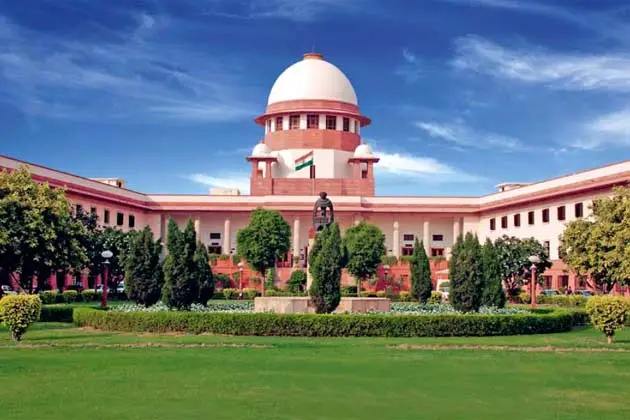
November 20, 2025 – In a landmark advisory opinion delivered today, the Supreme Court of India has clarified that neither the President nor State Governors can be bound by judicially imposed fixed timelines when deciding on bills passed by state legislatures. A five-judge Constitution Bench, led by Chief Justice B.R. Gavai and comprising Justices Surya Kant, Vikram Nath, P.S. Narasimha, and A.S. Chandurkar, unanimously held that prescribing rigid deadlines or the concept of “deemed assent” violates the separation of powers and the constitutional scheme under Articles 200 and 201.
The 111-page opinion addresses 14 questions referred by President Droupadi Murmu under Article 143 in May 2025, stemming from an earlier Supreme Court ruling in April 2025 (State of Tamil Nadu v. Governor of Tamil Nadu). That judgment had set specific timelines (one to three months) for Governors and the President to act on pending bills and even declared “deemed assent” for some delayed Tamil Nadu bills, prompting accusations of judicial overreach from the Union Government.
The Constitutional Framework: Articles 200 and 201
Article 200 empowers a Governor, upon receiving a bill from a state assembly, to:
- Grant assent (making it law),
- Withhold assent (and return it with a message for reconsideration, except for money bills), or
- Reserve it for the President’s consideration if it encroaches on Union powers or raises constitutional issues.
Article 201 governs the President’s actions on reserved bills: assent, withhold assent, or direct reconsideration by the state legislature.
The Constitution mandates that Governors act “as soon as possible” but provides no fixed timeframe, allowing flexibility based on a bill’s complexity, legal implications, or national interest.
Key Findings of the Advisory Opinion
The Bench systematically answered the President’s queries:
- Limited Options for Governors: Governors have only the three explicit options under Article 200. They cannot indefinitely withhold bills without returning them or refer them informally to the Centre. Withholding assent without a message frustrates the legislative process.
- No Judicially Imposed Timelines: It is “not appropriate” for courts to prescribe uniform deadlines. The phrase “as soon as possible” in Article 200 is deliberately elastic. Fixed timelines ignore variations in bills – some routine, others requiring scrutiny for repugnancy with Union laws or constitutional validity.
- Rejection of ‘Deemed Assent’: The court declared “deemed assent” – where prolonged delay automatically makes a bill law – as “alien to the Constitution.” Such orders amount to the judiciary “virtually taking over” executive functions, violating separation of powers. The Bench explicitly held that parts of the April 2025 Tamil Nadu judgment imposing timelines and deemed assent were “erroneous.”
- Indefinite Delays Impermissible: While no rigid limits, Governors cannot sit on bills forever or use pockets as a veto. Unreasonable, unexplained delays undermine federalism and democracy. In “egregious” cases, courts can intervene via limited judicial review, directing a decision within a “reasonable time” without commenting on merits.
- President’s Powers Under Article 201: Identical principles apply. The President, acting on ministerial advice, faces no fixed timelines. Decisions are not justiciable on merits, and the President need not refer every reserved bill for the court’s advisory opinion under Article 143.
- Scope of Judicial Review: Actions under Articles 200 and 201 are largely immune from challenge until a bill becomes law. Courts cannot pre-judge a bill’s validity or substitute their discretion for the Governor’s/President’s.
- Article 142 Limits: The court’s plenary powers for “complete justice” cannot fill constitutional silences by creating timelines or deemed mechanisms contrary to the text.
The opinion emphasized cooperative federalism: “Elected governments must remain in the driver’s seat.” Governors are bridges between Centre and states, not obstructions.
Background and Trigger
Tensions escalated in recent years, with opposition-ruled states like Tamil Nadu, Kerala, Punjab, and West Bengal accusing Governors of delaying bills on education, welfare, and administrative reforms – often seen as politically motivated. Tamil Nadu’s repeated petitions culminated in the April 2025 ruling, which cleared 10 pending bills via deemed assent after Governor R.N. Ravi’s delays.
The Union, through Attorney General R. Venkataramani and Solicitor General Tushar Mehta, argued this encroached on executive discretion. States countered that without checks, Governors could paralyze legislatures.
Implications for Federalism and Governance
This ruling restores executive discretion while warning against abuse:
- For the Centre: A victory upholding presidential and gubernatorial autonomy, shielding appointments from routine judicial mandates.
- For States: Relief that indefinite delays are unconstitutional, but remedies now depend on case-by-case writ petitions proving “mala fide” or arbitrariness.
- Judiciary’s Self-Restraint: By overruling its own prior timelines, the court avoids “judicial legislation” and reaffirms basic structure doctrines like separation of powers.
Critics from opposition parties may view it as diluting accountability, potentially encouraging delays. Proponents see it as correcting overreach, promoting dialogue via mechanisms like the Inter-State Council.
The Bench noted the April intervention addressed an “egregious situation” but cannot set binding precedents for timelines.
A Balanced Constitutional Equilibrium
Today’s opinion navigates the delicate balance in India’s quasi-federal setup. It prevents Governors from acting as “super Chief Ministers” while ensuring courts do not become surrogate executives. As Chief Justice Gavai observed during hearings, the court cannot “sit idle” if duties are flouted, but solutions must align with constitutional text.
In an era of strained Centre-state ties, this advisory – though not strictly binding – provides authoritative guidance. It urges mutual respect: states legislating responsibly, Governors exercising powers judiciously, and the Centre fostering comity.
As India evolves, parliamentary reforms or constitutional amendments may eventually impose guidelines. For now, the Supreme Court has reaffirmed that constitutional silences on timelines are intentional, not voids for judicial filling.
(Word count: 1,012)