
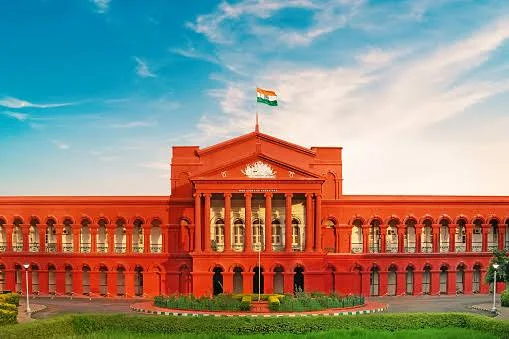
Bengaluru, November 18, 2025 – In a resounding affirmation of the right to practice law across state lines, the Karnataka High Court has ruled that state bar councils cannot deny enrollment to law graduates solely because their degrees were obtained from institutions outside the state. Justice Suraj Govindaraj, in Sri Rajashekar v. Bar Council of India & Anr. (Writ Petition No. 24401 of 2025; 2025 LiveLaw (Kar) 376), directed the Karnataka State Bar Council (KSBC) to enroll the petitioner—a law graduate from Uttar Pradesh—on its rolls, emphasizing the uniformity enshrined in the Advocates Act, 1961. This judgment, delivered on November 12, 2025, dismantles parochial restrictions, fostering a truly national legal profession amid rising concerns over fake degrees and inter-state mobility.
The case spotlighted the frustrations of aspiring advocates navigating fragmented enrollment processes. Petitioner Rajashekar, hailing from Aland taluk in Kalaburagi district, completed his LL.B. from Monad University’s Faculty of Law in Uttar Pradesh, a Bar Council of India (BCI)-affiliated institution. Eager to practice in his home state, he applied for enrollment with the KSBC. However, his application languished unprocessed, prompting him to approach the High Court under Article 226 of the Constitution. Rajashekar argued that the delay stemmed from an unwritten policy favoring graduates from Karnataka-based colleges, violating his fundamental right to practice any profession under Article 19(1)(g).
During the hearing, the KSBC’s counsel admitted the oversight but cited administrative burdens and verification challenges for out-of-state degrees. The BCI, impleaded as the second respondent, clarified its stance: Section 24 of the Advocates Act mandates enrollment by the state bar council of the applicant’s choice, provided the degree is from a BCI-recognized institution. No provision bars inter-state enrollment, the BCI affirmed, underscoring that transfers (under Section 24A) apply only post-enrollment elsewhere.
Justice Govindaraj, dissecting the statutory framework, held that the KSBC’s inaction was “arbitrary and discriminatory.” “There is no restriction or requirement for a state bar council to register only those who graduated within that particular state,” he observed, invoking the Advocates Act’s intent to create a unified bar. The court noted that Monad University’s affiliation with the BCI had been duly verified, rendering further scrutiny redundant. “The Act promotes pan-India practice; parochial preferences undermine this,” the judge remarked, aligning with precedents like Bar Council of India v. Bonnie Foi Law College (2015) 3 SCC 341, which emphasized uniform standards without geographic bias.
In a decisive operative order, the court mandated the KSBC to enroll Rajashekar “on the next enrolment date” following document verification, without insisting on a transfer certificate. It imposed no costs but cautioned against future delays, directing the council to streamline processes for out-of-state applicants. The judgment also referenced a companion case, Ravichandragauda R. Patil v. Karnataka State Bar Council (W.P. No. 105477/2025; 2025 LiveLaw (Kar) 380), where it ordered refunds of excess enrollment fees with 12% interest, reinforcing accountability under the Act.
This ruling arrives at a critical juncture for India’s legal ecosystem. With over 1.5 lakh law graduates annually (per BCI data), inter-state migration is commonplace, driven by better opportunities in metros like Bengaluru. Yet, earlier controversies—such as the KSBC’s January 2025 halt on out-of-state enrollments amid fake degree fears—had stifled mobility. Senior advocate Brijesh Kalappa, a vocal critic, had decried the move as violative of Article 14’s equality, arguing it unfairly punished genuine candidates. The High Court’s intervention echoes his stance, quashing “unreasonable classification” and prioritizing verification over blanket bans.
Legal experts hail the verdict as a “mobility Magna Carta.” Constitutional scholar Prof. M.P. Singh notes it aligns with Maneka Gandhi v. Union of India (1978) 1 SCC 248, expanding Article 19’s horizons. “It prevents balkanization of the bar, essential for a federal nation,” he says. The BCI’s submission further bolsters this, clarifying that Section 24 facilitates “enrollment at will,” subject only to the All India Bar Examination (AIBE) for practice rights.
Implications ripple beyond Karnataka. States like Gujarat (where a 2024 HC order granted provisional certificates to unapproved college graduates) and Maharashtra may revisit restrictive policies. The judgment could reduce enrollment backlogs—KSBC alone processes 20,000+ applications yearly—and curb malpractices by mandating swift BCI-linked verifications. For graduates, it democratizes access: rural aspirants from Uttar Pradesh or Bihar can now target southern hubs without procedural hurdles.
Yet, challenges persist. Fake degree scandals, like the 2025 Vyapam echoes, underscore the need for robust digital verification via the BCI’s portal. The court implicitly urged tech upgrades, aligning with e-Courts 3.0. Critics like KSBC members worry about overburdened verification teams, but Justice Govindaraj’s order prioritizes equity: “Administrative convenience cannot eclipse constitutional rights.”
As the dust settles, Rajashekar’s enrollment symbolizes hope for thousands. “This isn’t just my win; it’s for every graduate chasing dreams across borders,” he told reporters. For the bar, it’s a call to evolve—from gatekeepers to enablers. In a profession sworn to justice, this ruling ensures the scales tip toward inclusion, not exclusion.
(Word count: 698)