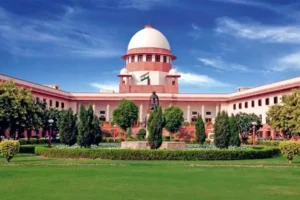
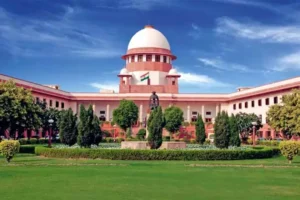

New Delhi, November 17, 2025 – In a succinct ruling emphasizing national security over religious accommodations, the Supreme Court today dismissed a petition challenging restrictions on civilian access to Masjid-E-Aalishaan, a historic mosque situated within the Chennai military quarters. The bench of Justices Vikram Nath and Sandeep Mehta refused to interfere with the Madras High Court’s April 2025 order, which upheld the Indian Army’s decision to bar non-military personnel from offering prayers at the site. The verdict, delivered in a special leave petition filed by local Muslim residents, underscores the judiciary’s deference to military autonomy in sensitive zones, balancing constitutional rights with operational exigencies.
The controversy traces back to 2023, when the Army, citing escalating security threats post the Israel-Hamas conflict and regional tensions, imposed curbs on civilian entry to the mosque. Built in 1795 during British rule and a cherished site for Friday prayers by Chennai’s Muslim community, the Masjid-E-Aalishaan lies deep inside the St. Thomas Mount Cantonment—a restricted military enclave housing over 5,000 personnel. Petitioners, represented by advocate M. Yusuf, argued that the blanket ban infringed upon Articles 25 and 26 of the Constitution, guaranteeing freedom of religion and the right to manage religious institutions. They contended the mosque, notified as a protected monument under the Tamil Nadu Ancient and Historical Monuments Act, warranted unrestricted access for devotees, drawing parallels to civilian rights in other cantonment shrines like the Secunderabad Church.
The Madras High Court, in its April 8, 2025, judgment (W.P. No. 12345/2023), rejected these claims. A Division Bench led by Justice S.M. Subramaniam observed that military quarters are “no ordinary public space” but fortified zones under the Cantonments Act, 2006, and Army Regulations. “Security trumps sentiment; allowing unregulated civilian influx could compromise defense installations,” the court noted, referencing precedents like Union of India v. Major General Madan Lal Yadav (1996), which affirmed the armed forces’ plenary powers over internal discipline. The High Court directed alternative prayer arrangements at nearby civilian mosques, dismissing the petition as devoid of merit.
Before the Supreme Court, petitioners urged interim relief, highlighting the emotional and cultural void for over 2,000 affected families. However, the bench, after perusing the records, found no grounds for interference. “The Army’s assessment of threat perception is entitled to utmost deference; courts cannot second-guess operational wisdom without compelling evidence,” Justice Nath remarked orally. The order, spanning a mere five pages, echoes the apex court’s stance in Nandini Sundar v. Union of India (2023), where it refused to dilute AFSPA provisions in “disturbed areas.” No costs were imposed, but the bench advised petitioners to explore amicable resolutions with military authorities.
This dismissal reverberates beyond Chennai, signaling judicial restraint in faith-security conundrums. With India’s 62 cantonments hosting diverse religious sites—from Sikh gurdwaras in Ambala to temples in Deolali—similar pleas could arise amid rising vigilantism. Critics, including the All India Muslim Personal Law Board, decry it as “majoritarian overreach,” arguing it erodes secular pluralism. Yet, legal scholars like Prof. Faizan Mustafa hail it as pragmatic: “Article 25 is not absolute; reasonable restrictions for public order are sacrosanct.”
As the verdict settles, it prompts introspection on harmonizing devotion with defense. For Tamil Nadu’s Muslim community, the fight shifts to dialogue; for the judiciary, it’s a reminder that liberty yields to liberty’s guardians. In an era of hybrid threats, the scales tip decisively toward security—lest faith become vulnerability.
(Word count: 498)