
New Delhi, November 17, 2025 – In a bold assertion of state autonomy over education, the Tamil Nadu government has approached the Supreme Court, contesting President Droupadi Murmu’s withholding of assent to the state’s long-pending anti-NEET legislation. Filed on November 15, 2025, under Article 131 of the Constitution, the petition marks a rare direct invocation of the Centre-state dispute resolution mechanism, escalating a decade-long feud over the National Eligibility cum Entrance Test (NEET). As medical aspirants nationwide grapple with NEET’s fallout—including record-high suicides and coaching industry dominance—this move underscores Tamil Nadu’s unyielding resistance to what it deems a “one-size-fits-all” policy detrimental to social justice.
The saga traces back to 2016, when NEET was mandated as the sole gateway for undergraduate medical admissions, replacing state-level exams. Tamil Nadu, a pioneer in equitable medical education through reservations for backward classes, viewed NEET as antithetical to its affirmative action model. The state’s assembly passed the Tamil Nadu Admission to Medical Courses Bill, 2021, in September that year, seeking exemption from NEET and revival of Class 12 board marks-based admissions. Governor R.N. Ravi forwarded the bill to the President, but after a three-year limbo, it was returned unsigned in October 2025, citing unspecified “constitutional concerns.” Tamil Nadu accuses the Centre of political vendetta, ignoring repeated representations and data on NEET’s inequities.
At its core, the bill proposes a return to the pre-NEET era, where admissions prioritized socio-economic equity over rote learning. Tamil Nadu’s model, honed over decades, allocates 69% reservation for oppressed castes—far exceeding the national 50% cap—ensuring rural and marginalized students access premier institutions like Madras Medical College. NEET, proponents argue, favors urban, English-medium students from affluent backgrounds, with a 2024 study by the state’s Backward Classes Commission revealing that 80% of top rankers hail from general categories in metros. The DMK government, led by Chief Minister M.K. Stalin, has framed the legislation as a bulwark against “federal overreach,” aligning with the Dravidian ethos of social engineering.
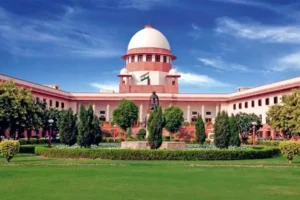
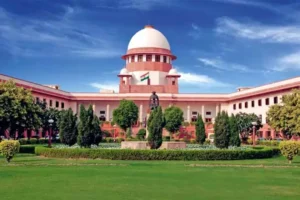
The Supreme Court petition, drafted by senior advocate Kapil Sibal and argued by the state, invokes Article 254(2), which allows state laws repugnant to central legislation to prevail with presidential assent. Tamil Nadu contends the President’s inaction—effectively a veto—violates Article 200, mandating timely gubernatorial action on bills. “The withholding is arbitrary and malafide, depriving Tamil Nadu of its legislative competence under List III (Concurrent List) of the Seventh Schedule,” the plea states, demanding “deemed assent” and a declaration that the bill overrides the National Medical Commission Act, 2019. It cites the Centre’s “selective silence” on similar exemptions granted to Andhra Pradesh and Karnataka in the past, alleging discrimination against non-BJP states.
This isn’t Tamil Nadu’s first brush with the apex court on NEET. In 2020, a five-judge bench upheld NEET’s constitutionality in State of Tamil Nadu v. National Testing Agency, ruling it aligns with Article 14’s equality but leaving room for state exemptions via assent. Justice D.Y. Chandrachud, then on the bench, observed NEET’s potential to “perpetuate disparities in access to medical education.” Yet, the Centre’s reluctance persists, rooted in the National Medical Commission’s (NMC) push for uniformity to curb malpractices. NMC chairperson Dr. B.D. Athani defended the status quo, stating NEET ensures a “level playing field” amid rising private college quotas.
Tamil Nadu’s grievance amplifies broader federal frictions. Since assuming power in 2021, the Stalin administration has clashed with the Raj Bhavan over 10 bills, including those on online gaming and welfare schemes, accusing Governor Ravi of partisan delays. The anti-NEET bill’s fate exemplifies this: Passed unanimously, it gathered dust despite Chief Minister Stalin’s personal letter to President Murmu in February 2025, enclosing affidavits from 1.5 lakh students decrying NEET’s toll—over 100 suicides in Tamil Nadu alone since 2016. “This is not just about exams; it’s about denying justice to the underprivileged,” Stalin thundered in the assembly, invoking Periyar E.V. Ramasamy’s legacy against Hindi imposition and central dominance.
Legal eagles are divided on the petition’s prospects. Constitutional expert M. Sridhar Acharyulu hails it as a “federalism litmus test,” predicting a favorable ruling given the SC’s 2023 directive in State of West Bengal v. Union of India emphasizing cooperative federalism. “Article 131 is underutilized; Tamil Nadu’s move could set a precedent for states like Karnataka challenging NEP 2020’s centralization,” he notes. Conversely, senior advocate R. Venkataramani, representing the Centre in past cases, warns of “educational anarchy” if exemptions proliferate, potentially fragmenting the All India Quota (AIQ) seats.
The stakes are sky-high for Tamil Nadu’s 15 lakh medical aspirants. NEET’s 2025 edition saw a 20% dip in the state’s toppers, with rural students scoring 30% lower on average due to language barriers—NEET is conducted in 13 languages, but Tamil’s inclusion remains perfunctory. The bill’s enactment could restore 85% state quota control, boosting admissions for Scheduled Castes (18%) and Most Backward Classes (30%). Critics, however, point to NEET’s role in exposing state exam irregularities, like the 2021 Vyapam-like scam in Tamil Nadu.
As the petition awaits listing—expected within a week before CJI B.R. Gavai’s bench—the discourse spills into politics. PMK founder Dr. S. Ramadoss, a NEET critic, rallied support, while AIADMK’s Edappadi K. Palaniswami accused the DMK of “grandstanding” without follow-through. Nationally, opposition leaders like Rahul Gandhi echoed solidarity, terming it a “fight against Modi’s unitary vision.”
This confrontation encapsulates India’s federal paradox: a Union of states, yet increasingly centralized in key domains like education (shifted to Concurrent List via 42nd Amendment). Tamil Nadu’s audacious step revives the Sarkaria Commission’s 1988 recommendations for timely presidential action, urging a 30-day limit on assents. If successful, it could embolden other southern states resisting the National Education Policy’s three-language formula and centralized curricula.
Yet, failure looms large. The SC might defer to the Centre’s “policy domain,” as in Christian Medical College v. Union of India (2020), upholding NMC’s regulatory supremacy. For now, Tamil Nadu’s youth watches anxiously; their futures hang on whether the court prioritizes equity or uniformity. In a nation where medical seats (1.1 lakh annually) chase 20 lakh dreamers, this isn’t mere legalese—it’s a battle for inclusive healing.
As hearings dawn, the echo of poet Subramania Bharati resonates: “From mud huts to marble halls, education must bridge divides.” Tamil Nadu’s plea to the SC is just that—a bridge over troubled federal waters, or perhaps a dam against central tides.
(Word count: 998)